10/18/08

What Does It Take To Be Drop Dead Gorgeous?


I've always told my kiddos, "A butt is a butt, they are all cracked." Tacky? You'll have to ask them. They grew up to be VERY conservative, so it must have done some good. I was simply cutting the edge off of all the insatiable focus the media put on just what our back sides are supposed to look like. Give me a break.

Honestly, folks, I get weary of "how" we are supposed to look...defined by Hollywood. Why can't we be content like the puppy dog draped in bolts of wrinkles?

And what measure will we take to look "gorgeous"? Hopefully we won't drop dead while en route!

You know, Botox those wrinkles away and blow your lips up no matter how bizarre they look, tummy tuck your fat, remove that arm hang, lift those buttocks, build your breast for self-esteem. I've heard it all. And is anyone really any happier when it's all said and done? NO. We are always going to come up wanting. Wanting more.

Side Note: Have you ever noticed how we Caucasians are forever trying to look like African Americans? We want darker skin to the point of danger, we want pronounced cute tushes, we want full lips to the point of looking like something from a distant planet, and often we want natural curly hair so we chemical our way there. Have I stirred your emotions?

What's In A Survey?

Have you heard about the survey of women taken just a year or so ago asking their thoughts on cosmetic changes? The highest percentage of them were adamantly opposed to cosmetic surgeries, etc. but when asked how many of them alter their looks with make-up, the percentages were just as high.

Is that hypocrisy? A little bit of paint may not be so bad for the barn, but reconstructing it with a dangerous foundation might be another matter.

Let's Take A Closer Look Into Our Faces. If You Dare.

The hottest product on the "street" today is Botox.

I can't even walk into my mother's doctor's geriatric office with out seeing signs screaming at me to get a Botox treatment. Then there is the hair salon. Sign-ups are at the front desk. Sign-up for a Botox party. And if that isn't enough, I am getting Botox invites in the mail from my fav dress boutique? Where does this end?

Just What Is This Fountain Of Youth Gig?

Botox is the brand name for botulinum toxin A, the poisonous bacterium that causes botulism and in large doses, can be fatal.

Did You Know?

Recently, I read that botulinum toxin is the most deadly poison known to humanity. "Molecule for molecule, it's a billion times more toxic than cyanide." (Dermatologist, Alastair Carruthers from Vancouver; Allure 2007)

The treatment is supposed to use highly diluted amounts of the toxin. It is injected into the facial muscles whose over activity produces skin wrinkles, often prematurely. It weakens the muscle at the entry point, weakening its ability to contract which in turn supposedly smooths out the skin.

Are There Lines Botox Won't Cross?
Yes,
it's noted that in cases of wrinkles caused by sun exposure, smoking, or the natural aging process, Botox is unlikely to help.

What Other Uses Does Botox Claim?

  • Eye-muscle disorders (approved, 1987)

  • Excessive sweating (unofficial uses)

  • Thwarting migraine headaches (unofficial uses)
  • Depression (unofficial uses)

Is it FDA Approved?
Yes, as of April, 2002, the FDA okayed it for cosmetic use (to treat frown lines). Since then, it's continued to be the most sought after cosmetic procedure in the U.S. .

Initially it was used to "freeze" everything. The brakes are on "...now that we know the point is to make movement more natural, symmetrical and softer." (Doris Day, clinical assistant professor of dermatology at NY University)

How Popular Is It?

Before being FDA approved for cosmetic procedures, 1.6 million shots were dispensed in the U.S., according to the American Society for Aesthetic Plastic Surgery. Causing it to be the most popular cosmetic procedure used. In 2006, more than 3 million people lined up for a hit.

Why Do We Do It?

  • We claim we want to look better.
  • We want to be more accepted.
  • We want to get better jobs as they are awarded to younger people.
  • We want the opposite sex to notice us.
  • We want the same sex to notice us.
  • We want to defy life and death.
  • We want to look like we once did.
  • We want, we want, we want.

Who Benefits?
For sure the company Allergan, the Irvine, CA based manufacturer for the drug. I read in 2007 that stated they were given the go ahead to launch a $50 million marketing campaign. Tell me it's not about money, folks. How much are they spending in 2008? (Allure, 2007) By the way, they are being questioned about misrepresenting the data they have on the drug. (Dr. Arnold Klein-lawyers and settlements.com)

Fredrick Brandt, a New York-Miami based dermatologist began using it in 1993. In 2007, he was the world's largest Botox consumer and injects up to 30 patients a day. That's $15,000 a day with ease.

How Long Does Botox Keep The Wrinkles Away?

Temporarily. About three to four months. Then it's back for more injections of the toxin. The question is how long does the toxin stay in your body?

Cost For This Quick Fix?
On average, about $400-500. Which means at least $1,200- $2,000 a year. Does this mean for one set of wrinkles or your whole face?

Are There Concerns From Experts?

YES!!!! What are they?

  • Unrealistic expectations.

  • Unqualified providers.

  • Inappropriate settings (like home parties)

  • Aesthetic plastic surgeons are concerned because Botox creates an avenue for doctors who are not qualified to make a mint. Why? Some patients are NOT candidates for Botox and most doctors are not able to know the difference.
  • Doctors are enticed because they can make $500 with an injection over $500 for an operation. How easy is that to figure? You know which one most of them are going to elect to perform.

  • Reseach shows that when tested in rats, within 72 hours of the injection (whisker muscles), the toxin was found in the brain of the rats. The toxin moved from one end of their brains to the other breaking down proteins and causing damage. The toxin was found up to six months AFTER the injection. The toxin also caused brain cell activity to be disturbed. (Journal of Neuroscience, April, 2)

  • Public Citizen, an American watchdog group has solicited the FDA to increase the warnings on Botox. PC reported that from 1997-2006 there were 658 known cases of patients experiencing adverse affects after being injected with b.t. and 180 of those suffered severe reactions. There were 16 deaths in the U.S.. Due to lack of data, PC estimates that these numbers only account for 10 percent of all cases. (The Daily Green, ABC NEWS Jan. 2008 )

The Risks of Botox?

  • Putting toxin in your body, no matter how much you convince yourself it's in small doses. Is it worth the risk?

  • Even when administered by skilled physicians there are risks, imagine what you are asking for when you let someone who is not skilled. Is it worth the risk?

  • The facial anatomy is ever so delicate and intricate. Is is worth taking the risk?
  • Too much Botox in the wrong area can cause distortions such as droopy eye-lids and raised eye-brows to loss of facial expression. Is it worth the risk?

  • Then there is the risk of sterility. Remember needles are involved. Is it worth it?

  • And if you have alcohol in your body you increase the possibility of bleeding more, which can cause the drug to travel to unintended locations. Note: some of these "parties" include wine and hordevores as a perk. Is it worth the risk?

The American Board of Plastic Surgery Cautions and Suggests:


  • While the procedure is typically quick and slightly invasive, there are still risks as it is a medical procedure.

  • Check Credentials. Is your doctor certified by the ABP's or other renowned society, and experienced in facial cosmetic surgery.

  • Get Evaluated. There should be a full medical history and eval from you by the doctor.

  • Be Informed. Is your doctor clearly explaining all potential benefits and risks. I bet they do this as to protect their rear ends. They won't leave this one out.

  • Discuss Your Decision. Share your thoughts with your family and friends. Do your own research.

  • Stay sober. Your choices may be altered under the influence.

  • Stay sterile. Botox injections should be performed in a setting with appropriate medical personnel and safety equipment on hand.


A Example Of A Failed Attempt To Cross Out The Lines:
Some say this is what caused Priscilla Presley's newest "look". And is it a look. I don't think Elvis would recognize her as the once beautiful young lady he fell in love with. I always thought she was one of the most gorgeous women I had ever seen. My heart sank when I saw her distorted face a year or so ago. I was in shock.

I had the opportunity to speak with one of Elvis' life time friends and body guard, and he confirmed that she looked worse even in person. He just shook his head in disbelief at the risk she took to looker younger. Yes, regardless, if someone else messed up, she was still the one who made the decision to take the risk.

An Example Of Lines Not Being Crossed

On a brighter note, if you happen to see Billy, The Early Years, it was refreshing to see Lindsey Wagner's untouched aging graceful face. Is it hard to see the process of life worn on the faces of those we once held in our minds as beautiful? Probably. But that is our dysfunction. We don't value the process of life. We don't properly define beautiful.


For me, Ms Wagner looked as though she had embraced life, while Ms Presley obviously tried to beat it and it slammed dunked her.

By the way, Priscilla was born in 1945 and Lindsey in 1949.

Not Double Lines But Double Standards
Why is that we can so readily accept men having lines and wrinkles, yet we are so aghast when we see older women aging with the same denominator? Ladies, WE are a part of the social ill in this country. We contribute to it with our continued need to look ageless. We weren't designed to look 20 and 30 years old at 50 and on.

Who Let The Secret Out?
Face it (pardon the pun), but all the treatment in the world is really not going to change how we look. We become laughable. Why do we pride ourselves in augmenting our bodies when it's clearly obvious. "Oh, she had a face lift." "Wow, her lips are sure blown-up." What about that is appealing? I can't figure it out. Maybe you can help me. I'm open.

Do I believe in taking care of ourselves? No question. But what does that look like? For me, it doesn't appear it's going under a scalpel, or in this case injecting poison into my body. Why do we not value age? We are a reckless generation living in a narcissistic society.

What Are The Lines To Be Drawn If Not Erased?
So where do we draw lines? Find the balance? Probably when we start looking like someone else. Or better yet, when we start looking like someone the cat just dragged in after a major cat fight. And when we are compromising our health by using toxins to rearrange our face.

Some would argue that I'm not seeing things clearly. I wish that were so when I'm looking square in the face of a once normal looking woman who now I'm trying to guess what possessed her to think her fake lips are inviting.

Too, we seem to do so much with men in mind. That is a fact. So listen to the male response. They will always be drawn to the natural look. Just ask them.

My View
Would I like to stay young looking all of my life? Sure. But that is not reality. It's certainly not maturity. And it's by far shallow. It's a lack of acceptance. The acceptance of time. Of who we are. I want to be able to look myself in the face every morning. Figuratively and in this case literally. I want to recognize the person who's looking back at me.

Do You?!

Copyright © 2008 by Pilates Worx 4 Life. All rights reserved. Check out website: www.pilatesworx4life.com


10/17/08

Poisoning Ourselves To Health? Part 3

Yet Another Reason To Be Concerned While Getting Well In The Hospital
I'm going to move on to another medical/hospital concern. Drugs. And I don't mean on the "street". Actually, some of those may be safer.

After each hospital stay, I can count on Mom coming home with six or more new drugs. Of which, most of the time are unnecessary. How do you decide that? It takes work. But it can be done. Find a trusted health/nutrition consultant who will work with you.

Did You Know That Deaths Occur:
  • 106,000 due to non-error medical effect from drugs

  • 80,000 due to infections in hospitals

  • 20,000 other errors in hospitals

  • 12,000 due to unnecessary surgeries

  • 7,000 medical errors in hospitals,

  • plus an additional 199,000 deaths due to improper outpatient care

  • Total: 424, 000 deaths annually

Source: JAMA (Journal of Medicine Medical Association)


Let's take a small detour into the world of prescribed drugs in general.
In one study pharmacists reviewed 2,103 prescribing errors and the following were the error rates found:

  • 3.99 per 1,000 drug prescriptions

  • Among these, 12% of the errors involved doctors overlooking patient allergy to the type of drug

  • 11% were due to incorrect dosages

  • 11% to using the wrong drug name

In yet another study, researchers reported that about 30% of the prescribing errors were due to lack of knowledge regarding drug therapy.

  • 29% to lack of knowledge regarding patient interactions with drugs

  • 17% to arithmetic mistakes

  • 13% to using the wrong drug name.

Can You Guess What Group Has The Highest Error Rate?

  • Pediatric Patients, yes, our little ones had the highest (5.89 ADEs per 1,000 prescriptions) Scary, folks!

  • Emergency-Room patients following at 5.05

  • 4.5 for obstetrics-gynecology

  • 3.5 for surgical patients

  • Prescribing an overdose was the most common error, accounting for 41.8% of all mistakes.

Drug Interactions Are Causing Deaths

  • Take the case of Viagra (April, 1998 by Pfizer, Inc). Yes, you got it. The drug to relieve men from erectile dysfunction.

  • Just in its infancy, the first month on the market, 1.7 million prescriptions were filled for the pill probably by men desperate to enjoy sex again.

  • Soon after, 16 of those men never got another chance as they died, presumably from fatal drug interactions.

Drug Interactions=When we take more than on prescribed drug. Which most of the time we are only following the direction of the doctor.

An Example With Little Mama:

Take something as simple as a flu shot. My mother had continued not only to have a reaction from the injections, she also got the flu anyway. When I addressed this with the doctor, it was ignored. I appealed. And I simply got, "Well, she probably needs the shot, and it's probably just coincidental that she has had problems."

"Oh, I see, that's why I had to sign that legal doc signing away your responsibility in the possible outcome of the shot????? What, then, was that for if there is nothing to be concerned about????"

Do they think we are just that dumb? I might be blond, but dumb I ain't!!! (Yes, I just abused the King's English!)

By the third year of flu shot drama, the doctor said, "Well, give me just one more chance. Let me give it to her and see what happens."

Three Strikes And YOU Are Out!

After the third time when Mom spiraled into a stroke just hours after taking it, then getting the flu, I was done with the flu shot and, yes, the doctor. I confronted the doctor once again. When I told her how sick Mom got again, and about the stroke, the doc finally acquiesced with, "You know what, maybe we need to quit giving her the flu shot." Well, duh. How long did this take for you to figure this out? Four years and a lot of unnecessary pain.

Part of the equation in all of this was that Mom was on a couple of other meds. And in the case of the stroke, the doc also had her on a very strong antibiotic. I had questioned the mixture to which I got a blank stare. That's always a red flag. The doctor insisted she needed the antibiotic. Maybe she did, but to mix it was my concern. As stated above, within hours, Mom began to experience weird sensations. Little did I know it was the beginnings of a stroke. Thankfully, I acted as fast as I could, and we were able to stabilize her.

A 3 a.m. Wake-Up Call 4 Little Mama

Let me site one more hospital/doc blunder that nearly took my mother's life. While in the hospital for a broken hip a few years ago, I got a call in the middle of the morning: 3 A.M..

Typically, I tried to spend the night with Mom, but everyone was concerned about my health, so I was going home late at night.

Anyway, the call was a jolt when I heard a nurse or tech on the other end, "Ellen, your mother has just been rushed to the cardiac unit. Her heart rate went up to 300 bpm, and we couldn't get her stabilized. For one thing we are not allowed to give her the med she needed, so we had to send her to the cardiac unit where they have the legal right to administer it. And it's on order."

OK, I'm thinking, am I having a nightmare??? Pinch me. When I could get my own stability in order, I had a hundred questions. Like, "What do you mean the drug she needs is "on order"?"

"Apparently, the drug is not on the "floor" so they have to order it from the pharmacy?"

The nurse checked on a few other things and called me back. She told me NOT to come down and assured me Mom was stabilizing. I reluctantly yielded. In a matter of hours, I was up and headed to hospital asap.

So now my mother is in the hospital for an entire different reason than her broken hip. Too, on a different floor, with a what seemed like a 100 other gadgets hooked up to her little body. And why? I wondered but wasn't getting direct answers.

At the end of the day, I thought she was OK, so once I again I headed home very late at night. The results: again, her heart went out of control in the middle of the morning. 300 bpm. I couldn't believe it.

Mess with her once, but twice? You don't get a third. Rushing back to the hospital, I immediately requested a meeting with the head doctor. He showed up on time and was at least kind. He disclosed to me that NO ONE should have called me to tell me what had happened. What??? The reason: A new rule for legal protection.

"Oh, really, who for? So I'm supposed to feel comfortable with leaving her knowing I won't be alerted to an emergency unless she's dead? Wow."

I pressed for answers as to why all of a sudden my mother was having heart issues at the tune of 300 bpm??? The same time every morning? I asked him what meds they had put her on???? And was this the cause?

He admitted to me that they were considering it was indeed the mixture and dosages of meds. He promised me they would change the "order". He knew I was going to hold him to it. They did, and to this day she has never had another heart "attack".


More On Medical Errors:

  • A phone survey by the National Patient Safety Foundation found that 42% of people believed they had experienced a medical error personally or to a relative or friend. I could answer, YES, to this on more than one occasion.
  • The Institute of Medicine (IOM) reports on two studies estimating the hospital deaths due to medical errors at 44,000 to 98,000 annually, which would place medical errors in the top ten causes of death in the USA.

  • Barbara Starfield's article in JAMA places the estimates even higher, citing a total of 225,000 deaths due to iatrogenic (NOTE BELOW) causes, which would place health-caused deaths as the 3rd leading cause of death in the USA.

  • Holland et al (1997) estimates as many as 1 million patients are injured while in the hospital and approximately 180,000 die as a result, with the majority due to medication adverse reactions.

NOTE: IATROGENIC is NOT A DISEASE. It means = DOCTOR-RELATED. A DOC DISEASE?
Sources: Light Party, Wrong Diagnosis, Mayo Clinic, RID, Sonlight Ventures.

Consider the next time you pop a pill. Do you really know what you are asking your body to accept. Remember we were not designed to injest synthetics/toxins. PLEASE research any med you are given. Too, make sure it's the right med. Find alternatives when you can.

So again I ask, "Can you "poison" yourself to health?"

Copyright © 2008 by Pilates Worx 4 Life. All rights reserved. Check out website: www.pilatesworx4life.com

10/10/08

OH, BROTHER!!!!!

I couldn't resist stealing this off of my big bro's blogsite.
He's a minister, and he played off of my fitness "religion": Pilates!


HE WROTE:

OOPS!!!!!


IT IS EASY UNTIL YOU DO IT RIGHT !

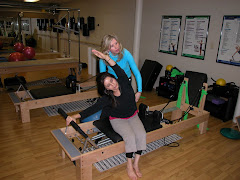
I WAS TRYING A NEW PILATES MOVE OR POSITION AS my sis BELOW:


"Pilates is easy UNTIL you do it right!",
my sister, Ellen says, and she should know.

Which made me think: A CHRISTIAN LIFE IS EASY.......UNTIL YOU DO IT RIGHT.

THE MINISTRY OF THE CHURCH IS EASY UNTIL YOU DO IT RIGHT!

NOTE: Brother, I did say NOT to do this at home without exercising GREAT CAUTION! LOL Love you!

Copyright © 2008 by Pilates Worx 4 Life. All rights reserved. Check out website: www.pilatesworx4life.com

10/9/08

Don't Die While U Are Getting Well, Part 2


Have I frightened you out of the hospital? My intent? Maybe, but not exactly.

However, I am in hopes that it will heighten your awareness. Not to exclude challenging you to become a link.

Regardless, DON'T become a statistic.

RID (Reduce Infection Diseases) Reports:

  • Only since 2004 did we begin to see some changes in the hospital system as far as addressing the hygiene issue. In '04, 26 states along with the D.C. enacted laws requiring hospitals to disclose infection rates to the public. What's the policy in your state?
  • As stated in the Side-Bar this week; In 2007, Medicare quit paying for treatment with several types of these infections CAUSED BY HOSPITALS (see Side-Bar for more detail).
  • Research tells us that 3/4 of patients are contaminated with super-bugs: MRSA and VRE(vancomycin-resistant Enterococcus) via cabinets, counter-tops, bed-rails, and bedside tables.
  • If you can see it, then it's likely one of these is lurking. This includes: uniforms, clothes of the doctor's clothes, including those of nurses and techs of course.

MRSA? Someone thought this was a name of a lady: "MRS. A". Oh my. Well, if so, she's a killer. Read on...

  • MRSA= infection is caused by Staphylococcus aureus bacteria — often called "staph." MRSA stands for methicillin-resistant Staphylococcus aureus. It's a strain of staph that's RESISTENT to the broad-spectrum antibiotics commonly used to treat it. MRSA CAN BE FATAL.
  • Most MRSA infections occur in hospitals or other health care settings, such as nursing homes and dialysis centers.
  • It's known as health care-associated MRSA, or HA-MRSA. Older adults and people with weakened immune systems are at most risk of HA-MRSA.
  • More recently, another type of MRSA has occurred among otherwise healthy people in the wider community. This form, community-associated MRSA, or CA-MRSA, is responsible for serious skin and soft tissue infections and for a serious form of pneumonia.

Source: Mayo Clinic

Again, let me remind you, that most all of this is preventable. But we are going to have to shift out of our apathy or more people are going to die while trying to get well.

What Do Hospitals Do 4 Prevention?

Most hospitals routinely give a heavy round of antibiotics at the onset of your arrival so as to prevent, yes, staph infections. Remember meds are always their answers, or so it seems. Rather than looking at the cure, it appears they "robotically" keep it "under drug control". And hope the patient doesn't die.

OK, so I am for protecting the patient with a med if absolutely necessary. But I will NOT accept this overuse of antibiotics in place of cleaning house.

Again, the incidents I observed were not few and far between. Rather they were part of the daily routine on every shift. And this was not in a run-down hospital. Not that that would be an excuse. Again, ALL of the incidents were easily remedied.

What Can We Do?
I'm not here to tell anyone how. I think we can figure that one out as we each know what we are best at in situations that call for actions. Here are a few suggestions:

  • While they are spreading germs, let's spread the word for "clean-house".
  • NOT accepting antibiotics as their answer rather than cleaning up their act!
  • We can insist our hospitals become more concerned for our lives.
  • We have a voice. Let's use it! Speaking-up to the docs and staff is critical when we or our loved ones are in the hospital.
  • Become a hospital advocate.
  • We can write letters to our government requesting more action.
  • Write letters or make phone calls to our hospital about our concerns.
  • Write articles to our newspapers.
  • Request hospitals' info on infections acquired while there.
  • Request info on their procedures to decrease the hygiene dangers.
  • Get involved with RID or other like organizations.
  • Start our own organization in our own town.
  • We can quit ignoring this social dilemma.

What Did I Do?

  • I stayed close by my mother's side. Not everyone can or will do that. Regardless, if you care, do what you can, when you can.
  • I learned the names of staff on each shift.
  • I found which ones I could count on and became friends with them. Believe me, you will need all the help you can get.
  • And, please know that there are awesome nurses, techs, and docs. You have to find them.
  • I took on some of the work, like her personal care when I could.
  • I cleaned behind the staff. NO, not their behinds. ugh. Kicked a few though! JK, JK, JK!
  • I bathed her or always tried to be there when they did. Once I had to be gone for a couple of days. They conveniently didn't give her a bath the days I was gone. She was all but begging them to. My daughter came on the scene and alerted me. Only when they knew they were in for trouble did they make amends.
  • Consider taking your own Lysol! Actually, I use a non-toxic formula.
  • I spoke up and often. I asked questions. I took notes and pictures!
  • I tried to be there at every doc visit.
  • When I couldn't, I would set up a time to visit with them.
  • I requested info on any tests they were going to run and why. And at times, they would admit she really didn't need the test. Which usually meant one less stress for her.
  • When the "button" didn't work (no, not due to a technical problem), I went to the nurse's station.
  • When a staff person was rude or unwilling, I went above them.
  • I met more than one nurse supervisor and director. Not to exclude doctors. Fun times, people.
  • Remember, they might be an xpert on certain things, but YOU are the xpert when it comes to your loved one.
  • I literally kept my mother alive (NOTE: I'm not dismissing God's will for her life.).
  • Their neglect at times was unbelievable.
  • Besides the lack of hygiene, you would be appalled at the lack of discernment in popping pills in her mouth. I walked in one day and one of the techs decided to "pump" the Morphine button without asking Mom (which was against their rules). I said, "Excuse, me what are you doing?"

"Uh, uh, uh. I was just thinking..." as she dropped the button like a hot coal and then sheepishly ducked her head.

"Don't even go there. You were simply hoping to knock her out so you didn't have to do any work. She was clearly NOT in any pain."

  • I asked what meds they had her on and an explanation of why? Amazing what you will find. Wait until you hear that story!
  • Yes, they knew who I was and who they best NOT mess with: MY LITTLE 86 year old MAMA.

NEXT TIME: Yet Another Scare: Meds. Are they a trick or a treat? Hummmm. See U There !

Copyright © 2008 by Pilates Worx 4 Life. All rights reserved. Check out website: www.pilatesworx4life.com

10/6/08

What Are Your Chances Of Dying In The Hospital?? Part 1


I'm my mother's advocate. At this season of her life, I have become her avenue to survival...in the health field. Life and death have often weighed in the balance.

If you haven't experienced this role, the likelihood is high that you one day will. So listen up. And if for no other reason, make yourself aware in case YOU find yourself alone. You WILL NEED to become your own advocate. For what? To protect your life.

In this case, we are going to discuss patient advocacy. You see, we are no longer living in a day where the hospital is a safe place to recover from an illness. It's quite the opposite.

Welcome to the 21st century.

Personal Observations
Through the many visits to the hospital over the past ten years with my mother, there are too many disturbing incidents to recall all of them on this blog. However, I feel I must alert my audience of possible hospital hazards.

Note, that I salute you if you work at a hospital. My reporting here is not to slam dunk, but to heighten awareness in the real world we live in. And possibly challenge you to be a change agent in your workplace. Small steps can literally save lives.

Neither am I saying phooey on all hospitals. And if you don't know, America has probably the best emergency care in the world. I'm not saying it's perfect, but you might want to stop by if you just ripped your arm off or something of that nature. OUCH!
However, the hospital stay is not where you want to be if you can help it.
Suggestion: Get in and out afap.

Just My Opinion?
Is this just my opinion? I wish. My awakening began years ago when doctors IN the hospital were exhorting me,
"Get her out of here as fast as you can."

"The longer she is in here, the less likely she will heal."

"If you want her to get better sooner, take her home as soon as possible."

What Is The Concern?
Hygiene is top on the list. You would be incensed if I cited all the germ infested incidents I encountered. Here are just a few:
  • A nurse dropped her pen in Mom's water glass. She simply pulled it out and gave the water back to Mom to drink.

  • Repeatedly, I saw nurses and techs come in and without washing their hands, then begin to "handle" Mom's utensils, etc. with their "germy" hands.

  • Now, get this: There were those who dutifully came in washed their hands. BUT, then they touched every possible crevice of the room, and followed up by putting their hands all over my mother.

  • I saw many a doc come in, wash their hands in the germ plastered bathroom, shut the door by grabbing the doorknob, then proceed to my mother's bedside to check her out from head to toe. Hello, doorknobs are germ-grabbers.

  • I observed nurses and techs cleaning her bedpans, then proceed back in the room without washing their hands, and touch wherever and whomever they pleased. For certain Mom.

  • I saw them leave the bed pan, uncleaned in the bottom of the shower floor. As if no one was going to stumble on it or see it? They were hoping?

  • I witnessed them reusing their gloves. That is, they would put them on, take them off to perform some task, then put the same gloves back on and carry on with their work. Never mind that "where" they lay the gloves was certainly not germ filtered.

  • Too, I watched as they took off their gloves, handling the outside of them when throwing them away, and then begin to touch what my mother would be touching before leaving the room. Her bed-rails, her sheets, her tray, you name it.

  • Once when Mom was so sick a nurse came in and was going to wet a washcloth for her to use to clean her up. You won't guess how she wet the cloth. She took it to the sink, turned on the water, lay the cloth DOWN in the sink and let the water run on it. Then came back to it and picked it up and proceeded to use it on my mother's private parts. You want to tell me that isn't sick? Like that sink wasn't loaded with every kind of infectious ill there is?

Is Any Of This Preventable?

There wasn't anything that I saw that wasn't preventable. It's going to take the responsible parties to be willing to be pro-active. While health professionals need desperately to heighten their methods of cleanliness, we need to insist that they do. Something as simple as keeping their hands and the patient's room truly clean, would change these deaths rates drastically.

And think of what was going on when I wasn't there. I don't even want to imagine. Did I need to set up a camera while gone as a means of prevention/protection? Maybe this might be a good policy!

Remember I'm NOT just talking about the aides, I'm talking about supposed qualified RN's and doctors.

What Did I Do?

Did I remain silent in these situations? What do you think? NOT with a "double" NOT!!! More about this in my next post.

Stats Staring Us In The Face Of Death:

  • The 4th leading cause of death in the U.S. is from acquired infections from hospital stays. It kills more people than AIDs, breast cancer, and auto accidents.
  • Most of these infections are preventable.

Read the following quotes from RID (rid infection deaths):

On Hospitals:

  • Many people equate a hospital environment with being sterile and germ free. Nothing could be further from the truth. Hospital infections are the 4th leading cause of death in the United States. Numerous people have entered the hospital for what should have been routine surgery, only to die from hospital acquired infections.

The Stats:

  • Betsy McCaughey (former lieutenant governor of New York) and founder of the Committee To Reduce Infection Deaths, says that hospital acquired infections kill as many people in the U. S. annually, as AIDS, breast cancer, and auto accidents combined.

The Hospitals And Their Efforts:

  • Very few states require hospitals to report their infection rates, or to inform an unsuspecting public. The problem is veiled in secrecy, with many hospitals not willing to spend the money or time required to correct the situation. Additional education and instruction would greatly lower the incidence of infection.

What About The Hospital Staff?

  • Many doctors and nurses are not using proper hygiene.
  • Hand-washing is essential between patients, in order to prevent germs from being carried from one person to another, but many health care practitioners do not like to wash their hands this frequently, and cause patients to be at risk.
  • Even doctors' ties, stethoscopes, and blood pressure cuffs can transmit dangerous germs within a hospital.

What's A Patient To Do?

  • A patient has little recourse in some of these situations, but do not be afraid to ask a nurse or doctor to wash their hands before they touch you.
  • You may be immediately labeled as "bossy", but better bossy than dead.
  • (Statistics tell us that over half of the doctors who come to your hospital room have NOT washed their hands.)
  • RID has 15 suggestions for you to consider for your hospital stay. Please ck them out at http://www.hospitalinfection.org/protectyourself.shtml

NOTE: http://www.hospitalinfection.org/

Revised: Oct. 8th

More next time on what some of these infections are and how we might prevent them. Too, we will discuss more causes of death while on your supposed road to recovery in the hospital.

Copyright © 2008 by Pilates Worx 4 Life. All rights reserved. Check out website: www.pilatesworx4life.com

Completely Free!

NOTE: Not for the lazy and faint of heart!


Copyright © 2008 by Pilates Worx 4 Life. All rights reserved. Check out website: www.pilatesworx4life.com

9/30/08

Is Suicide Your Answer?

Life events seldom happen the way we plan. And often we are left stunned. Especially when someone we know elects to snuff out their own life.

The recent news of a young teacher committing suicide caused memories to groan deep from within me. Leaving behind a young wife and child was tragic enough. But added to that, he left his students with a plethora of confusion and despair. He was beloved by these precious young people, especially by my friend's daughter, who happens to be a senior.

Imagine the horror her tender spirit felt upon finding out he not only took his life, but he plunged to his death by jumping off of a bridge.

And just the day before, through tears, he had shared his love for the students. Which left them even more perplexed and not without guilt.

False guilt, but still. Guilt that why didn't they see it coming? Why didn't they recognize he was saying good-bye? Their youthful innocence being dismissed in their own minds. Not realizing even adults were amiss in the drama. So how could they have possibly "called" it even if it was staring them in the face? Regardless, somehow they felt responsible for this injustice placed in their lives.

People In My Own Life
Yes, indeed his suicide created my own set of dismantled emotions from the past. Memories of different people but in particularly one dear friend. Who always wore a smile. Whose eyes endlessly seemed to dance. Yet, behind the appearance of happiness was the torn and broken heart that was cleverly hidden and covered with the painted smile ever before us.

Should I have taken note when just months before he shared with me the story of his friend who committed suicide? His friend who seemed to have it all together but was shockingly found with a gun to his head? Should I have noticed that something just didn't seem quite right? That a tiny piece was missing? That his eyes somehow seemed deeper yet darker? I told myself it was just my imagination and or that it was just his given personality.

Should I have felt some guilt when I moved away without even saying good-bye?

One month later, he considered taking his life. Thankfully he chose to come under pastoral care. He relinquished his gun to his minister with the agreement to call if he felt the "urge" to consider the attempt again. Darkness grabbed his mind and heart because within the next month, he had bought a second gun.

Days later, he sat down at his desk, with pen in hand and wrote his last words. Then took the gun, and he left this life and those of us who loved him.

A few more months passed before I stumbled onto the sobering news. At a sandwich shop, I ran into a mutual friend. When I asked had she spoken to him lately, her siren stare spoke loudly. Only I didn't know why. She stood, took my hands and said, "Oh, Ellen, I guess you didn't know, he took his life." Everything around me began to spin out of control. I lost all sense of where I was. I gave no thought to onlookers. And I broke down in a flood of tears as she held me in her arms. I'll never escape that day.

Since then, I've come to grips with his untimely death. Yet, his smile is forever imprinted upon my heart. And I will forever miss him.

What To Make Of Suicide
Some say, "Suicide is the most selfish act a person can commit." Or, "It's the unpardonable sin, and you will for sure go to hell for it." Perhaps, you, too, believe that. But is it really? Perhaps it's a matter of perspective. We can debate it all day long, but what does it accomplish? Little.

Why not take a fresh look at it and discover ways to be more aware of how to recognize signs and help rather than flipping it off as selfishness. We can tag it all day long as the most selfish choice we could ever make. And the benefit? Little to none. Suicide is NOT going away.

What Do The Stats Tell Us?
Statistics show that while women take the lead in "attempting" suicide, men take the lead in actually accomplishing it, for the lack of a better word. Why is that? Many conclude it's because women truly don't want to die, but are screaming for help. They want to be stopped.

Whereas men typically have made up their minds, and it's a done deal. Logical? Left brain at work?

Women typically resort to using "pills" while men use more drastic measures: Firearms.

Pills give the opportunity to possibly giving life a second chance. While a bullet pretty much eclipses all considerations.

Nation Stats:
Starting in 1933-had the highest % of suicides. The Great Depression?
Today: 11% per 100,000 commit suicide
Men-17.7 %
Women- 4.5%

Youth (15-24)- 10.0%
male-16.2%
female-3.5%

Elderly (65+)- 14.7%
male- 29.5%
female- 4.0%

Who Are The Most Likely?
#1-White men
#2- Elderly (65+)
#3- Youth (15-24)
#4- Women

Firearms Used- 52.1%
Who uses Firearms?
Elderly- 72.0%
Men- 57.6%
Youth- 46.6%

Poisons-17.6%

Other measures: about 8%

On average, someone attempts suicide every 40 seconds in the U.S.

On average, someone commits suicide every 16 minutes.

On average, 88 people die by suicide each day in the U.S.

More people kill themselves than are killed by others.

Northwestern states highest % of suicides.
Alaska had highest (29%) for youth.
Stats= 2005


Looking Behind Their Eyes
While we can't take responsibility for a person's decision to take his/her own life, we can choose to become more aware of the signs. Here are just a few to consider.

  • Depression
  • Loss of interest in relationships, academics, occupations, just life in general
  • Withdrawal
  • Extreme wt loss and or loss of appetite
  • Talk of suicide, even hints of it
  • Loss of belief in their purpose in life
  • Extreme highs and lows
  • Looking at gender and age might be a sign as well if there is a question
  • Having gone thru trauma of some sort
  • The sense that they are saying their good-byes
  • Prematurely finalizing aspects of their life

Most suicide choices were made out of some sort of desperation. A loss of self-worth to their world around them. The feeling of no value to loved ones.

Yes, the focus maybe inward, yet it extends outward. They are usually NOT trying to hurt anyone, but in their minds spare others from being hurt. Many times they believe they are inadequate in supplying the needs for their loved ones.

Clearly their thoughts are not rational. So to try and rationalize "why" will only lead you to more confusion. It will never make sense. Rather, let's accept that our minds are a piece of Divine Work. And within that comes humbling complexity. We understand very little about the mind. Get past the whys and move into prevention via awareness.

What Are Some Things YOU Can Do To Help?

  • Listen, no I mean really listen.
  • Don't try to be their savior. There's only One of those!
  • Encourage them to seek solid counsel.
  • Help them find a pastor/counselor or someone who is qualified to help.
  • Give them hotline #s (see below for a list).
  • Ask them to join you or someone they trust in a suicide prevention contract (if they even begin to think they are being drawn into taking out their life, they will call you first).
  • Know when you have done all you can do, and refer them to someone who is more equipped to help. Know your limits.
  • And if they are a minor, you should report them to trusted officials and family.
  • Not to dismiss the possible importance of contacting help if they are an adult.

FOR HELP: Call toll-free: 800.SUICIDE (784-2433), 1-800-273-TALK (8255), for Spanish: 1-888-628-9454, Deaf: 1-888-628-9454.

http://www.suicidepreventionlifeline.org/

Copyright © 2008 by Pilates Worx 4 Life. All rights reserved. Check out website: www.pilatesworx4life.com
9/29/08

Thinking About Taking Your Life?


COMING UP THIS WEEK: An article on suicide. Serious but needed info for us to consider.

Copyright © 2008 by Pilates Worx 4 Life. All rights reserved. Check out website: www.pilatesworx4life.com
Double Your Chances


Double Leg Stretch and the 100 were elected by a recent study as the best way to tone your core, even over traditional crunches.

Prepare Your Mind And Body: 
  • As always review the 5 basic principles of alignment (click). 
  • Of course, you need to include the basic principles of Pilates. 
  • With those in focus, let's begin.
  • Steal away some time for yourself. 
  • Props: Your Pilates mat, a mirror to view yourself in, some quiet music, and a small towel in case you need it for your neck.
The Double Leg Stretch:
  • In supine position (on your back), begin to prepare: Inhale. Exhale.
  • Inhale and with your exhale begin to lift your head and upper back off the floor with your hands behind your head (try not to use them as a means to hold up your head). 
  • If you can, have your fingers touching just tip 2 tip so that you are not tempted to use your hands as a prop. 
  • Take ONE leg at a time off the floor into a table top position, making sure you are keeping your core engaged so as not to go into your lower back. 
  • Inhale and as you exhale slowly extend your legs outward while you extend your arms back so that you are basically in one long position (note photo). 
  • If you can't extend your legs outward without keeping steady or without popping your belly, you might want to back off and not extend your legs quite so far. Are you engaging your core?
  • Inhale and as you exhale, bring your legs and arms back to together (photo). This time you are bringing your arms and hands in and around to your knees OR your ankles, IF you can (photo). 
  • NOTE: One method may teach you to allow your arms to travel out and around your body, then bring them back up along on the inside of your body, back to the top above your head. 
  • Repeat 5 times and you may increase to 10 WHEN you are able to control the move with precision. 
Watch 4:
  • At all times, engage your core. 
  • Let your head follow your spine. Do NOT allow your head to take the lead. 
  • Keep your legs level, not allowing one to fall lower or higher than the other. 
  • Do the same with your arms. 
CAUTION: Exercise at your own risk. Always seek the advice of a health professional before starting ANY exercise program. 
Copyright © 2008 by Pilates Worx 4 Life. All rights reserved. Check out website: www.pilatesworx4life.com
9/26/08

Stay Tuned Up

See you soon, so keep posted on my posts!!!!  I'm out of pocket at a conference.  And trying to enjoy some R&R mixed in with the work.  So far so good. 

Thanks for taking the time to stop by for a quick visit.  If you haven't checked out the side-bar lately, you might take this opportunity to see what's new.  

Stay tuned! 

From the core,  EL

CAUTION: Do not attempt this at home without the advice of your trusted Pilates professional instructor.  
Copyright © 2008 by Pilates Worx 4 Life. All rights reserved. Check out website: www.pilatesworx4life.com

9/22/08

Enjoy The Memories Of Calorie Free Daze


These were the days withOUT any thought to what in the world a calorie was!


Copyright © 2008 by Pilates Worx 4 Life. All rights reserved. Check out website: www.pilatesworx4life.com

9/18/08

Go To Pasture, Or Not?

A common denominator among most companies whether it be Acai or some other juice: Pasteurization. U.S. FDA laws are the driving force.

We may not be concerned that there's only one in a million chance of getting ill from unpasteurized products, yet if we happen to be that one, our perspective drastically shifts.

When Were We First Led To Pasture, or is it Pasteur?
As most of you know, pasteurization has been a part of our food system for eons. Louis Pasteur, a french microbiologist and chemist developed the process, and that's how it came to be known as pasteurization. Its first testing was completed April 20, 1864. He had no idea how vast his discovery would affect the world for generations to come.

Unlike sterilization, pasteurization was a blessing at the time, as it didn't completely destroy the quality of the food or liquid. Actually, its process reduces the number of viable pathogens so they are unlikely to cause disease. Keeping it in lay terms: it is the process of heating liquids for the purpose of destroying bacteria, protozoa, molds, and yeasts (Wiwipedia).

When Did Laws Come To Pasture?
Due to tragedies, in 1996 laws were being considered to regulate standards for the production of fruit juices. From what I understand, the catalyst stemmed from the death of a young child. The child drank an unpasteurised apple juice (Odawala product) contaminated by a strain of E-Coli (Escherichia). Seventy other people were affected as well, but survived. NOTE: Odawala immediately began flash pasteurizing (1996).

In 1999 and 2000, unpasteurized orange juice contaminated with salmonella bacteria caused hundreds of people in the U.S. and three Canadian provinces to be sick. The 1999 outbreak contributed to one death.

Raymond Formanek Jr. Director, Communications Staff
U.S. Food and Drug Administration, said,

Under the new rule, juice processors are required to follow Hazard Analysis and
Critical Control Point (HACCP) principles, a food safety program developed by
NASA to prevent food-borne illnesses among astronauts. Manufacturers using HACCP
systems conduct science-based analyses of food production processes, locate
where the hazards can occur, take steps to prevent problems, and respond rapidly
to problems. FDA inspectors will do spot-checks to ensure that the processors'
HACCP systems are working. Unpasteurized, packaged juices produced and sold at
retail establishments must carry a warning label. Large companies have a year
from the publication of the regulation to implement HACCP programs. Small
companies must comply within two years after publication, and roadside stands
and other very small operations must comply within three years. The FDA
estimates that between 16,000 and 48,000 juice-related illnesses occur in the
United States each year. For more on juice safety, see the FDA news release at www.cfsan.fda.gov/~lrd/hhsjuic4.html.

Temps and Times in the Pasture: How Long and Hot Does it Have to be?
From what I understand the temps and time exposed to the temps companies choose to pasteurize dictate the shelf life of the product. Therefore, when you see a product with a longer shelf life, you can pretty much count on that the temps may have been higher and the exposure much longer than that of a product with shorter shelf life.

Some Types of Pasteurizations:
HTST, high temp/short time, which gives shelf life about two weeks. UHT, ultra high temp which gives a much longer shelf life; months. Kettle past. from what I understand uses lower temps with a longer period of exposure to the heat. The product is quickly cooled down, then packaged, and sent to the store to be sold.

Recent Developments in Pasture?
  • Flash pasteurization: means it has a higher temp but a shorter period of exposure to the heat.
  • Cold pasteurization is used sometimes for the use of ionizing radiation (see Food irradiation) or other means (e.g. chemical) to kill bacteria in food. Food irradiation is also sometimes called "electronic pasteurization". (Wikipedia)


Do the Temps and Time Matter Out on the Pasture?
Yes. A lot, according to the experts I spoke with from the various companies. For one the higher the temp and the longer exposure, the more compromised the quality of the product is. Quality as in taste, yes but also in the potency of the nutrients. Example, the antioxidants are compromised.

While pasteurization has saved lives, many feel it has been overly used in our food processing. Where do we draw the line? With progress comes great comfort to our lifestyle. However, coupled with progress comes adverse effects. There is no way around it. Resident evil, of some sort? Perhaps.

Yes, we are damaging the integrity of our foods with the need to preserve them for longer shelf time to accommodate our busy lives. We can't have it all. We are a greedy spoiled nation. There I said it. With compromise comes great price.

So Do We Pasture In Or Out?

  • As the consumer, you have to take responsibility and decide.
  • There are times you might need a prod with a longer shelf life for one reason or the other.
  • That's up to you as long as you make yourself aware that the product will not be as healthy or have the quality as one with a shorter shelf life.
  • CAUTION: Please note that if you don't keep your product in the frig once you purchase it, you compromise its safety regardless of the pasterization.
  • Awareness is the key. I know you haven't heard that from me before! Actually, I think that's my mantra # 2 or 3. Or is it #1?
What Are Your Other Options:

  • If you want fresh"squeezed" milk, grow your own cow!
  • Fresh squeezed juice: get a good blender/juicer. I use VitaMix and love it. I have a friend who uses a juicer (Champion brand).
  • Look for the freshest products. Guess where you will find them in the store? Certainly not in the canned-food section. Rather in the refrigerated section.
  • The frozen section is a good option.
  • But the best option is in the produce section. Spend most of your time and $ there.
  • Look for rich color and firmness in most of your produce.
  • Shop at a Whole Foods type store.
  • Buy organic when you can, remembering even some of it has been compromised.
  • Better yet, if you have local market or neighbor where the food is homegrown, spend your $ there.
  • Plant your own little garden. Prepare to work!

Though pasteurization isn't involved, this reminds me of a certain type of bread I was buying. For a time we weren't using bread much, and I neglected to throw the loaf away. Over a month later, the bread still looked the same. Goodness. That rattled me. Believe me, I'd much rather found that it had mold on it. That's the day I quit buying bread. And I began to make my own. I'll take my mold over their preservatives any day!

Copyright © 2008 by Pilates Worx 4 Life. All rights reserved. Check out website: www.pilatesworx4life.com
9/15/08

Acai Fix

I'm having a serious Sambazon fix! The stores closest to me are no longer carrying the frozen Acai product.

Whole Foods , it will have to be. So after Ike's gone, I'll blow on over to Dallas. In the meantime, I'm waiting for product Sambazon is sending me; their freeze-dried Acai powder. I can't wait to try it in my afternoon smoothie.

Also, I just received MonaVie's juice. Thanks, Betty! It's chillin' in the frig. I just tried my first sample. MonaVie has a rich flavor. It was tart, which I like, but with a zap of some sort. Almost like a carbonated fizz. No, it's not carbonated.

I'm sure as soon as my son comes in on fall break, we'll head to Jamba Juice. Yummmy.

As you can see, I'm still in the midst of my research
.
STAY TUNED!


Copyright © 2008 by Pilates Worx 4 Life. All rights reserved. Check out website: www.pilatesworx4life.com

Double Your Benefits


Coming up this week: Double Leg Stretch and its benefits to your health.
Stay tuned.


Copyright © 2008 by Pilates Worx 4 Life. All rights reserved. Check out website: www.pilatesworx4life.com

9/13/08

Some Of You Just Need To Butt Out!

OK, OK, you don't need to get put out over the title. The fact is, it may save your life. So listen up and share the story if it doesn't pertain to you.

Last evening we were in discussion with a new friend, Daniel. He shared his journey with one type of butt or the other and his addictions to them. No, he's not kinky, or at least I don't think he is.

Dan evoked many thoughts from my past as we sat there. Like Dan, I had learned to butt-out a long time ago. I was about 16 and haven't butted back in since. While, like most people, his struggle continued on into his young adult life.

Yes, I'm talking about smoking. "Smoking what?", you ask. You go first! I'm waiting. Are you expecting a confession? You won't get one. At least not in this article. Give me a call, and we'll discuss it. Lighten up, folks.

So none of you ever smoked a cigarette, much less marijuana. Good for you. But for those of you who ever did or do, or know someone who is, listen up!

What The Experts Are Saying:

According to C. Everett Koop, it's never too late to butt-out. Those were his words. Well, his and co-writers Michael Flore, and Chris Hollenback in a recent AARP article (Sept. 08).

Since the 60s-70s we have come a long way, baby. Reports began surfacing that smoking was not safe for our health. Many of us quit. Many of us didn't. As a matter of fact, currently more than 18 million Americans 45 and older are smokers. And indeed, the percentages are not retreating. They have actually gone up five percent since 2000. Yet, seven out of 10 smokers say they want to break the habit and butt out (OK, OK, so they didn't say it that way). Not exactly. The problem is, breaking the habit is dreadfully difficult.

My Own Expertise

Speaking empirically, I began smoking at the tender age of 14. Wow! And, yes, I inhaled, unlike Bill (really, Bill, do you expect us to believe you?). Thinking that addiction was a joke, I had no concerns when I lit that first KOOL cigarette standing in the bathtub at a girlfriend's house. Well, it was the least likely place for us to get caught. You see, there was a window above the tub. Did I ever get dizzy. Talking about a buzz. NOT so "cool". Yet, we thought we were. Do you have the T-shirt? Confess.

As time rolled by my young life, I continued to enjoy the hazards of smoking. And, by the way, they were only about .35 a pack. Now I have to calculate a brain adjust when I see sale signs screaming, "$4.98 a pack". And we thought gasoline prices were costly?

Little did it compute in our adolescent minds that we were compromising our lives. We had bigger ills at that time. Drugs. And I don't mean legal. So when mescaline, LSD, speed, heroine, etc. were dancing around us, cigarettes seemed the least taxing.

How could we have known at that time that nicotine was more addictive than cocaine or heroine?

Too, growing up in VA, tobacco fields were everywhere. My own maternal grandfather grew and sold it; yet, he never took up the habit. Men courted their cigs at church as well as at any other formal situation. It was a part of our lives. There was no mental filter, pardon the pun. Although, I do remember my pastor saying, "Smoking might not send you to hell, but it will get you to Heaven a lot quicker!" I just thought that was a cute saying. I sported it a few times myself. Well, of course, after I quit.

More Research and Stats:

If you think non of this pertains to you and your world, read on.

  • In the United States, an estimated 25.9 million men (23.9 percent) and 20.7 million women (18.1 percent) are smokers.
  • It's highest among persons living below the poverty level (29.9 percent).
  • The more educated a person is, the less likely they are to smoke. GED=43.3% compared to 16 years of edu = 7.1% smoke.
  • "One billion people will die a smoker's death in the 21st century and the misery that precedes that final outcome is incalculable." (Koop, Flore, and Hollenback; 2008)function.
  • An estimated 440,000 Americans die each year from diseases caused by smoking.
  • Each day, nearly 6,000 children under 18 years of age start smoking; of these, nearly 2,000 will become regular smokers. That is almost 800,000 annually.
  • It is estimated that at least 4.5 million U.S. adolescents are cigarette smokers.
  • Approximately 90 percent of smokers begin smoking before the age of 21.
  • If current tobacco use patterns persist, an estimated 6.4 million children will die prematurely from a smoking-related disease.
  • According to a 2001 national survey of high school students, the overall prevalence of current cigarette use was 28 percent.
  • Nearly 20 percent of 12th graders smoke cigarettes daily.
  • Adolescents who smoke regularly can have as difficult of a time quitting as long-time smokers. (stats taken from Amer. Lung Assoc. site; also clk on adolescents for a great site).

Is it Ever Too Late to Butt Out?

Absolutely not. According to research:

  • After quitting within 20 minutes your heart rate drops.

  • After 12 hours your carbon monoxide levels normalize.

  • Two weeks-12 months your risk for heart attack drops and your lungs begin to heal.

  • One-9 months your shortness of breath begins to improve.

  • In 5 years your stroke risk is the same as a non-smoker's.

  • Research also shows that even after quitting the habit after 65 years of age, you reduce such risks as: emphysema, lung cancer, osteoporosis, hearing loss, cataracts, impotence, poor circulation, coronary heart disease, and Alzheimer's disease.

  • Any other benefits? Yes, your recovery from broken bones, surgery and illnesses is accelerated.

  • On the more personal side, your loved ones will thank you for taking better care of your life. They may even give you a few more kisses. Not to be offensive but many people say that there is nothing worse than kissing a person who's a smoker. And think of the second hand smoke you will be eliminating from your sphere of influence.

How I quit:

The fact is, most of you who smoke don't want to. I feel for you. Believe me, I do remember quitting cold. For me, that was the only way it was going to work. I had "tried" to only meet "Unsuccessful". However, I would be amiss if I didn't tell you I did have a motivator. My big brother. My big bro, Charles, who happened to be a minister. I was going to move in with him and his wife. No smoky there! Could I have sneaked around? Sure. But somehow, I knew this was my chance to rid myself of this evil, once and for all. I had too much respect for them to try and keep up the habit when they weren't looking.

Too, let me say quitting wasn't without clouds. For about five years, I picked up that "smoke" again and again. Thankfully, only in my dreams. Or I should say nightmares. Every encounter would wake me up in a sweat. For you see, I knew if I ever put another cigarette to my lips, that would be it. Bondage for the rest of my life. And that in and of itself kept me from stepping over the line! And, yes, for a few years even the smell of a cigarette would trigger the need for a fix.

These days? I haven't had nightmares about smoking in forever. Is it compelling when I encounter it face-to-face ? Yes. It compels me to make an exit.

So How Can YOU Butt Out?

The FDA has approved seven meds to aide the smoker in quitting. Are they without side-effects? That is doubtful. But in some cases, they may be lesser of the two evils. That's where you will have to do your own personal research. Too, you might want to check out your health care plan. Some offer accommodations to recovery. "Medicare Part D covers quit-tobacco counseling and prescription drugs. Every Medicare plan is required to cover at least one quit-tobacco medication." Koop, Flore, & Hollenback.

Also, there are free quitlines and free drugs to callers in some states. The free national tobacco quitline is 1-800-QUIT-NOW. Too, you can check www.smokefree.gov .

Personally, I would highly recommend going to a Whole Foods type market and explore natural options. Counseling is paramount. You will likely need to replace one habit for a productive habit. One lady began exercising in place of smoking. Another picked up the crochet hook to keep her hands busy. Find what fits you. Take it a baby step at a time if need be.

Or you might go for a more severe resolution. JUST QUIT. Please know, I'm not saying that's easy. It's not. It worked for me, but that doesn't mean it's applicable to everyone. Butting out is easier said than done;it's not as easy as its cracked up to be.

The first step is the desire to live longer. To be more healthy. To admit that it is an addiction. To admit you need a support system. To take responsibility for the addiction and begin to make necessary changes. You'll never want to butt in again!

Take a look at the cig cost, which by the way, does not include health cost issues.

Put a Cigarette Costs Calculator on your site!


Sources: AARP, Never Too Late by Koop, Flore, & Hollenback; U.S. Public Health Service's 2008 Clinical Practice Guideline; National Health Interview Survey (NHIS), 2005, National Center for Health Statistics; American Heart Association; American Lung Association.

Copyright © 2008 by Pilates Worx 4 Life. All rights reserved. Check out website: www.pilatesworx4life.com